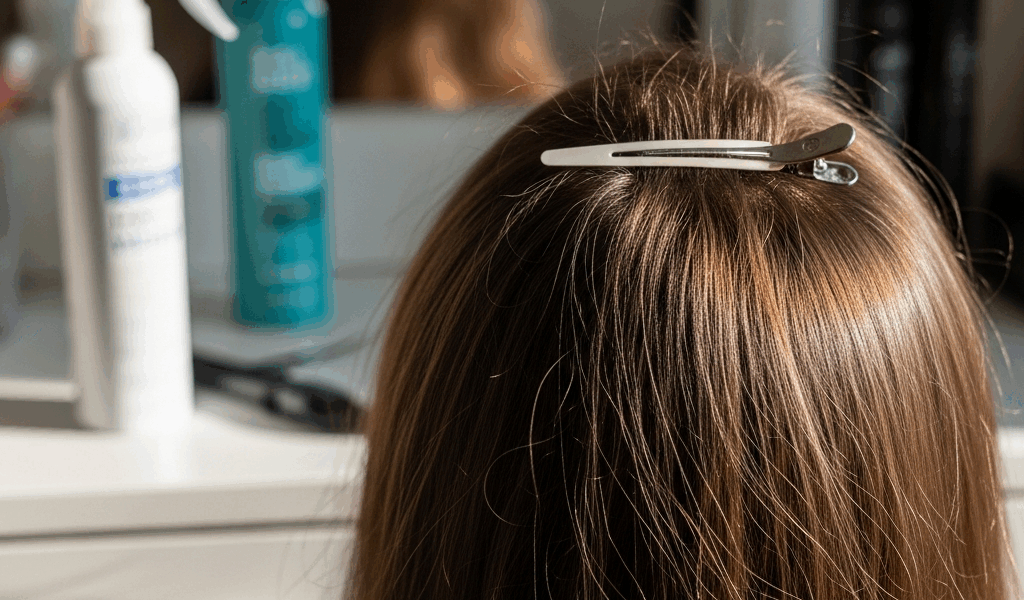
Why Your Fine Hair Loses Volume Before Lunch
Fine hair has gotten complicated with all the conflicting advice flying around. Use more product. Use less. Get layers. Avoid layers. I spent about three years washing my hair wrong, buying the wrong stuff, and honestly just blaming my genetics — turns out I was fighting my hair’s actual structure instead of working with it. Today, I will share everything I figured out the hard way.
Here’s what’s actually happening on a physical level. Fine hair carries maybe 6 to 8 cuticle layers per strand versus the 10-plus layers on thick hair. Fewer layers means less trapped air, less shape retention, less of everything you want. The strands are lighter. They collapse under their own weight by mid-morning while guys with coarser hair haven’t even thought about their hair yet.
Your scalp produces sebum on its own schedule — completely indifferent to your hair type. On fine hair, that oil migrates from root to tip by 10am because there’s less surface area slowing it down. Roots go greasy. Crown goes flat. You feel like you failed at basic hygiene. You didn’t. It’s just physics.
Most guys respond by loading up product. A heaping palm of clay, a thick pomade — “more hold” being the theory. Wrong. You’re stacking weight onto hair that literally cannot support weight. A pea-sized amount of the right product will beat a quarter-sized glob of the wrong one. Every single time.
The real culprits live in three places: the barber chair, the shower, and your product shelf. Fix those three and you stop chasing volume all day.
The Cut Is Either Helping or Hurting You
Probably should have opened with this section, honestly. Your haircut is either the entire reason your hair holds shape or the entire reason it doesn’t — and most barbers cut fine hair exactly the same way they cut thick hair. That’s the mistake.
Blunt, clean lines hold structure. Razor-heavy cuts and aggressive layering create too many short, scattered pieces that fall flat independently. Think of it like this — a bundle of straws held tight looks full. Scatter those same straws across a table and suddenly you’ve got nothing. Blunt ends stick together and support each other. Razored, choppy ends don’t.
Length matters more than most guys realize. Under 1.5 inches on top and you’ve got nothing to direct upward — it just pins flat against your scalp. Over 3.5 inches and the weight wins by late morning, bending at the crown and staying bent. The sweet spot is roughly 2 to 3 inches on top. Long enough to style upward, short enough to hold that position without constant product reinforcement.
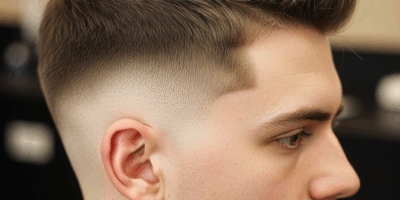
Sides should fade tight. The top needs actual working length. That’s the architecture of a fine-hair cut.
When you book your next appointment, tell your barber this exact thing: “I have fine hair that loses volume during the day. I want a blunt line on top, no heavy layers, roughly 2 to 3 inches of length — clean, not choppy.” If they seem confused or start pushing razor texturing anyway, they’re not the right barber. Find someone who treats fine hair as a different problem, not just regular hair in a smaller quantity.
Specifically ask them to skip: razored texturing, aggressive point-cutting, over-thinning the crown, and anything that creates dramatically different lengths throughout the top. Watch what they actually do. A barber who understands fine hair will use clippers and scissors in ways that preserve each strand’s integrity rather than undermining it.
How You’re Washing and Drying Is Probably the Real Problem
Skipping the blow dryer is one of the fastest ways to guarantee flat hair by noon. I’m apparently a slow learner on this one — I washed my hair every morning, combed it while it was damp, air-dried on the commute, and then wondered why I had four decent hours before total collapse. Don’t make my mistake.
Blow-drying upward from the roots isn’t optional for fine hair. Your hair’s volume structure sets while it’s wet and warm. Skip that step and your cuticles lay flat against your scalp — and that’s where they stay. Air drying doesn’t create lift on fine hair. It creates surrender.
Here’s the sequence that actually works. Towel-dry first, but rough the towel upward — scrunch from underneath, lifting the hair away from the scalp. Not side to side. Not downward. Direction matters here because you’re setting a pattern before styling even starts.
Use a blow dryer on medium heat, medium speed. High heat damages fine strands fast — and high speed just scatters the hair instead of directing it anywhere useful. Angle your head and your brush to lift roots up and back while pointing the nozzle downward along the shaft. A round brush or medium paddle brush both work fine. Dry to about 80 percent, then let it cool. That cooling phase is where the shape actually locks in.
Don’t wash daily if fine hair is your reality. Overwashing strips your scalp’s natural oils, your scalp panics, and then compensates by producing more oil faster than before. Three washes per week is the ceiling. On off-days, a cool-water rinse and some finger-combing handles everything without resetting the clock on oil production.
Products That Don’t Weigh Fine Hair Down
But what is the right product for fine hair? In essence, it’s anything lightweight with a matte finish and a texture that adds grip without adding mass. But it’s much more than that — it’s also about application technique and timing.
What works: matte clay in amounts roughly the size of a green pea, warmed between your palms first, worked into the roots before moving through the lengths. Volumizing mousse applied to damp hair before the blow dryer — this adds structure at the strand level without weighing anything down. A lightweight volumizing spray, either pre- or post-dry depending on the specific product.
What doesn’t work: anything labeled glossy or slick, most pomades unless they’re specifically water-based and genuinely lightweight, heavy waxes, thick pastes, and — I’m apparently the perfect cautionary tale here — anything marketed specifically to men with thin hair that costs over fifteen dollars and promises all-day hold. It lies.
I bought an expensive high-hold clay once. Twenty-two dollars. It felt like someone had poured wet concrete onto my crown — and it looked exactly as bad as that sounds. A $6 matte clay from the drugstore did twice the job with half the weight. I’m apparently a drugstore-brand person now and it works for me while the premium stuff never did. That was a twenty-two dollar lesson.
Apply product to slightly damp hair, never bone dry. Work it into your roots first. Your hair should feel light when you’re done — almost like you applied nothing. If it feels heavy, you either used too much or used the wrong thing. Start over.
How to Reset When Your Hair Goes Flat Mid-Day
The title of this article says noon specifically, so let’s address that exact moment. Crown is flat. Roots feel greasy. You’ve got six more hours of being visible to other humans.
Option one is dry shampoo. A two-second spray at the roots, worked in with your fingertips. It absorbs the oil and creates enough texture to buy you a few more hours. Keep a travel-sized can in your bag or desk drawer — Batiste Classic runs about $9 and fits anywhere.
Option two is a quick cool-water reset at the sink. Scoop water upward at your crown, scrunch with your fingers while it’s still wet, then let it air-dry or hit it briefly with a bathroom hand dryer. This resets the cuticle structure without requiring a full wash. Takes maybe ninety seconds.
Option three requires nothing at all. Just your fingers. Run them backward against the grain at your crown, ruffling the hair upward in short bursts. It redistributes everything and creates the appearance of volume for another couple of hours. Genuinely nothing to carry or buy.
But here’s the honest part — and that’s what makes practical advice like this actually useful to the people reading it. If your cut is right, this entire section becomes something you almost never need. A properly cut fine-hair style means you’re touching your hair once a day, not five times. If you’re rescuing your hair every two hours, the cut is the problem. Not the product, not the technique, not the dry shampoo brand. Go back to the barber.



Stay in the loop
Get the latest find my haircut updates delivered to your inbox.