
Why Your Hair Keeps Sticking Up
Hair that won’t lay flat has gotten complicated with all the product recommendations and barber advice flying around. Everyone’s pointing at a different culprit — the humidity, your shampoo, your technique. But after three years of buying every pomade, clay, and paste on the market, I learned everything there is to know about why hair misbehaves. Today, I will share it all with you.
Nine times out of ten, people are chasing the wrong fix entirely. You’re either stuck with a cut that’s actively fighting your natural texture, applying product to hair that’s too dry to absorb anything, or pushing your hair against its natural growth pattern every single morning. One of those three things is your problem. Probably all three, honestly.
The maddening part is how random it feels. Tuesday it lays down perfectly. Wednesday it stands straight up like you grabbed a live wire. That inconsistency is actually useful information — it means the cut or your application method is failing you, not some fundamental flaw in your hair itself.
The Cut Is Probably the Real Problem
Probably should have opened with this section, honestly.
Short, layered cuts look fantastic on fine or straight hair. On thick, coarse, or wavy hair? Disaster. Heavy layering creates multiple lift points throughout the shaft — each short layer wants to spring outward in its own direction, and no product on earth bridges that gap. You could apply a full jar of $34 Baxter of California Clay Pomade and it still won’t hold.
The thing barbers call the “weight line” is what matters here. It’s the perimeter length where hair sits heaviest and lies flattest. A solid haircut preserves that. A bad one strips it away — especially on top — and suddenly your hair has zero anchor. It goes feral. That was my exact situation for about eight months straight.
Frustrated by a cowlick that wouldn’t quit, I let my barber talk me into what he called a “textured crop” — clipping the top short with heavy layers for dimension. Looked genuinely sharp leaving the chair. Six hours later it was full bedhead. The cut created no weight to hold anything down, and I kept blaming my products like an idiot.
Here’s the language that actually works at your next visit: ask for a longer guide on top — at least an inch longer than you think you need — and tell them to blend the sides into that length rather than creating defined layers. Thick or curly hair specifically? Ask for a “disconnected undercut.” Those words mean something precise to someone trained in the craft. Use them exactly.
Fresh cuts also need three to four weeks to settle. The hair sits at its most precarious length right after a cut — it hasn’t started growing back in yet. If the sticking-up problem started the same week you were in the chair, wait it out. Six weeks with no improvement means the cut itself needs fixing.
How You Are Applying Product Wrong
But what is proper product application? In essence, it’s matching product to hair state at the right moment. But it’s much more than that.
Bone-dry hair rejects product the same way a Gore-Tex jacket rejects rain — it sits on the surface instead of binding to the shaft. You end up with flakes, buildup, and zero hold by noon. I’m apparently someone with particularly coarse hair, and medium-hold matte clay works for me while heavy pomade never does anything useful.
Don’t make my mistake. I ran product through completely dry hair every morning for months. Got frustrated. Bought something new. Repeated the same useless process. Spent probably $200 on products that were fine — I was just using them wrong.
Your hair should be towel-dried when you apply product. Not dripping wet, not bone dry — genuinely damp to the touch. If you can squeeze water out, too wet. If your fingernail comes away completely dry, too dry. That in-between state is where product can actually penetrate and set while the hair dries naturally around it.
Hold products — pomades, gels, matte clays — go in while the hair is still damp. They need moisture to activate. Finishing products like light texturizing sprays or dry shampoo go on last, after the hair is mostly dry, just to add grip or texture. Using them in reverse order is exactly why your hair looks stiff and unnatural before 10 a.m.
For thick or wavy hair that refuses to lay flat, a medium-hold matte clay might be the best option, as hair with real texture requires something that tames rather than amplifies it. That is because heavy pomade adds shine and enhances movement — the opposite of what you want. Apply the clay to the roots, work it through with your fingers while the hair is still slightly damp, then air-dry or use a cool shot from a dryer. Blow-dry in the direction you want the hair to go. Not upward. Never upward.
Working With Your Growth Pattern, Not Against It
Your hair has a direction it wants to go. Most people never bother identifying it — they just force everything flat or into whatever style looked good in a photo. That’s why the controlled look lasts three hours before your hair completely revolts.
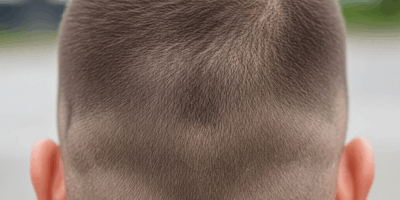
Find your growth pattern by looking at the crown and front hairline when your hair is completely dry and product-free. Which way does it naturally want to fall? Cowlick on the left side? Front that wants to flip up? That’s not a flaw. That’s information — and that’s what makes working with your hair’s natural behavior so effective for actually keeping it tame.
Once you know the pattern, train the hair to sit in that direction rather than against it. Front naturally wants to flip up slightly? Style it so it flips up slightly, then use a light hold product to lock it there. You’re not fighting the texture. The hair cooperates because you’re not demanding something fundamentally contrary to its nature.
While you won’t need an elaborate ten-step routine, you will need a handful of consistent habits. First, you should dampen your hair with a spray bottle — at least if you want the product to actually work. Literally ten seconds. Second: apply product while damp, working in the direction your hair naturally falls. Third: air-dry or use cool air. That’s it. No forcing. No fighting.
When to Go Back to the Barber
This new approach to application takes about two weeks to really show results. If you’ve fixed your method — dampening before product, using the right product type for your texture — and things still won’t cooperate after that window, the cut is the problem. Go back.
Tell your barber this exactly: “The top is standing straight up no matter what I do. I need more length on top or fewer layers so there’s actual weight holding it down.” If they wave it off and say it’ll grow in on its own, find someone else. A good barber hears the problem and solves it. Full stop.
Messy hair that won’t lay flat is fixable — it just requires diagnosing the actual cause instead of randomly trying new products. Start with the cut. Move to the application method. Adjust for your growth pattern. Work through those three things in order and your hair will lay flat without looking flat. So, without further ado, go grab a spray bottle and start there.



Stay in the loop
Get the latest find my haircut updates delivered to your inbox.