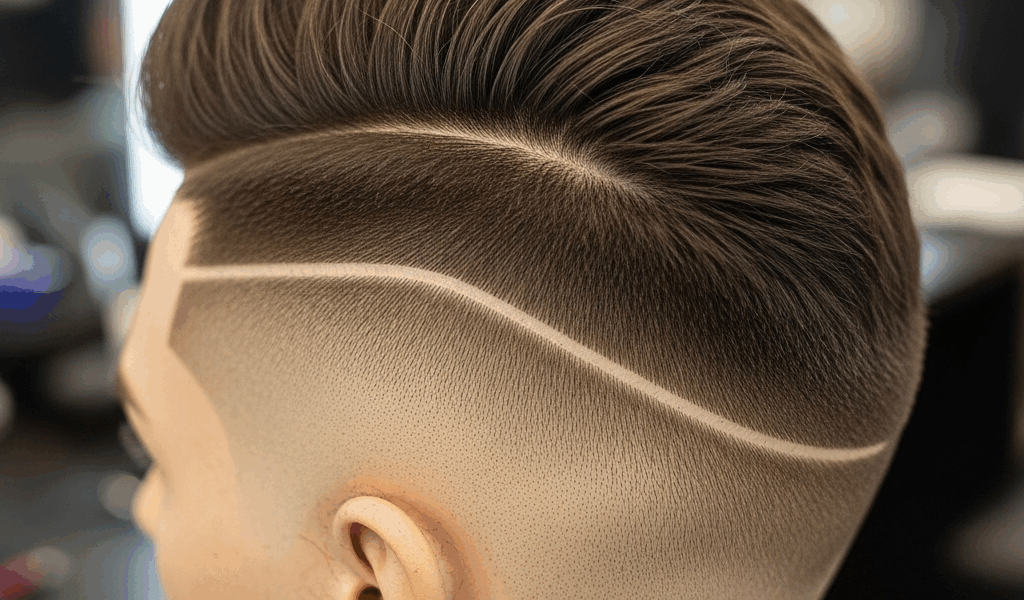
Best Fade Haircut for a Round Face — Add Structure Without Looking Flat
Fade haircuts for round faces have gotten complicated with all the conflicting advice flying around. Go high, go low, get a crop, skip the beard — everyone’s got an opinion. As someone who spent three years working chair-side in barbershops after bombing my own haircuts for years, I learned everything there is to know about matching fades to face shapes. And round faces? They have very specific needs most guys never hear about.
This article includes affiliate links. We may earn a commission at no extra cost to you.
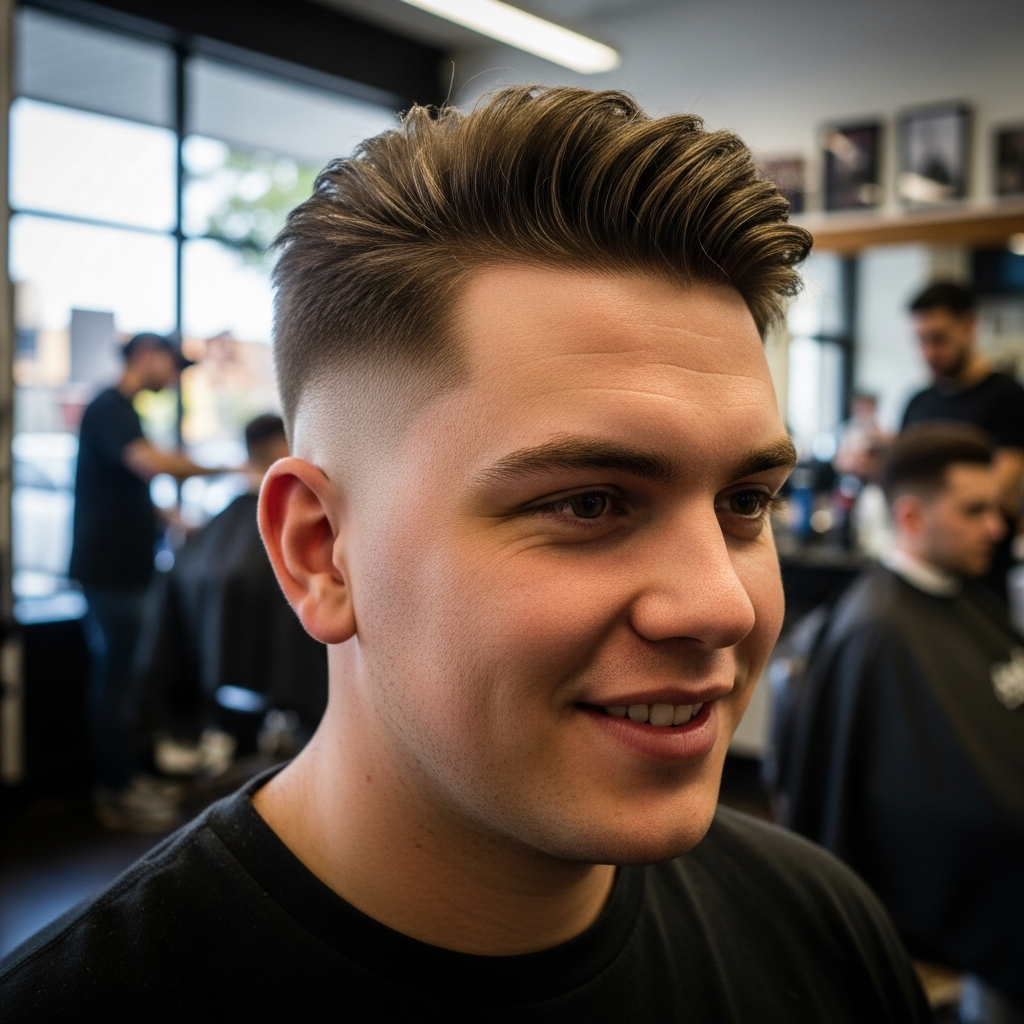
Eight years ago I kept walking into barbershops asking for “something clean.” My barber would give me whatever looked sharp on his Instagram grid — and I’d walk out looking wider than I came in. Took me an embarrassingly long time to figure out why.
Round faces are broader at the cheekbones and jawline than they are tall. That’s the core problem. A fade alone won’t fix it — you need the right fade paired with the right top length and texture. The fade is just the foundation. What you build on top matters far more.
Why Round Faces Need Height and Angular Cuts
But what is a “face-shape appropriate fade,” really? In essence, it’s a cut engineered to create vertical lines that make a round face read as longer and narrower. But it’s much more than that — it’s an optical illusion your barber constructs with geometry, not just scissors.
Round faces are balanced in width and height. To push back against that visual effect, you add length vertically and strip bulk horizontally. A fade handles the horizontal part — tapering the sides close to skin. Top length handles the vertical part by pulling the eye upward. Both halves matter.
Without height on top, even the sharpest fade looks flat. I’ve seen guys with immaculate skin fades — crisp lines, perfect detail work, the whole thing — who still looked blocky. An inch of length on top, no texture, no direction. Just a round head with short sides. The fade was flawless. The cut still failed them.
Angular cuts work because they introduce geometry that wasn’t there before. Sharp lines, hard parts, slicked textures — these create visual structure. A high fade in particular creates elongation by extending the fade line higher up the head. When it climbs toward the temple, your eye follows it upward. That vertical movement is what you’re after. Not style for style’s sake. Function.
Flat, uniform-length styles are your enemy here. Buzz cuts, flat-tops, anything that sits evenly around the head — these emphasize exactly the width you’re trying to reduce. Heavy blunt bangs or a straight-across fringe do the same thing, just at the forehead instead.
Best Fades for Round Faces
High Fade with Pompadour
This is probably the most reliable option. A high fade — clippers at a 0.5 or 1 guard on the sides — creates that vertical extension right away. The pompadour on top adds volume and direction. Hair sweeps back and up, which visually stretches the face lengthwise.
Top length should be at least two inches. Some guys go three — that’s fine. The barber blends the fade into the top over roughly an inch of transition. Not choppy, not so soft you can barely see the fade. A clean, medium blend is the sweet spot.
Styling matters here. While you won’t need a full vanity of products, you will need a pomade or clay with real hold. I use Baxter of California Clay Pomade — around $28 for two ounces — because it grips without looking wet or plasticky. Work it through damp hair, blow dry upward and back, finish with your hands while the hair’s still warm.
The pompadour works on round faces because it pushes volume upward and away from your sides. It’s essentially the opposite approach you’d take on an oblong face, where you’d want width at the sides to balance a long chin. That’s what makes this pairing endearing to us round-faced guys — it’s working with simple physics.
Textured Crop with High Fade
More casual than a pompadour — but still effective. Keep the top between 1.5 and 2.5 inches, and ask your barber to build in texture through point-cutting the ends or running clippers lightly against the grain. That texture breaks up your head’s outline.
The texture is doing real work here. A blunt, even crop reads heavy. Textured ends look lighter, more directional. The fade should still be high and clean — same 0.5 or 1 guard. You want visible contrast between tapered sides and the textured top.
This style is forgiving, honestly. Rub a light paste through damp hair and air dry, or blow dry with your fingers for more control. The texture handles the rest — it still looks intentional even when you’re not trying hard.
Undercut with Volume on Top
An undercut is more extreme than a fade — everything below the temple line gets buzzed short, while the top stays long and disconnected. No blend. It’s a harder look, but the stark vertical separation is genuinely powerful on round faces.
Top length should be at least two inches. The undercut line itself sits around the temple and creates a very visible vertical edge — that edge is where the structure comes from. It’s geometric and intentional. Frustrated by soft, blended styles that kept losing their impact after a few days, I started recommending undercuts to rounder-faced clients using a simple rule: the harder the line, the longer it stays readable.
Styling requires commitment. Strong-hold clay, blow drying daily, top sitting up and away from the head. Let it fall flat and the whole effect collapses.
Fair warning — undercuts have been around six or seven years now. Not about to go extinct, just everywhere. If you want something that reads a little less expected, stick with the high fade instead.
Styles to Avoid with a Round Face
Buzz Cuts and Full Fades
Probably should have opened with this section, honestly. It’s the most common mistake I see. A buzz cut is the same length all over — no top volume, no height, nowhere to build vertical structure. A round-faced guy buzzes his head and suddenly his face looks like a perfect circle.
A full fade where the top is also kept very short — half an inch or less — falls into the same trap. You’re left with no vertical real estate to work with. Don’t make my mistake; I buzzed my head one summer thinking a cleaner look would fix everything. It made things significantly worse.
Full Beard Without Fade
Not saying skip the beard entirely. But a thick, full beard covering the jawline adds width and heaviness to the lower face — which is already the widest part on a round face. That’s visual overkill.
Keep facial hair tight. Quarter-inch stubble at most. Pair it with a high fade to counterbalance the fullness and you’ll be fine. The fade offsets what the beard adds.
Low Fades with No Top Volume
A low fade with short top length essentially turns your entire head into one uniform shape. The fade isn’t high enough to create vertical extension, and the top isn’t long enough to add height. Worst of both worlds — a fade that can’t do the job paired with a top that won’t help it.
Low fades are beautiful on oblong or rectangular faces — they add width and compress apparent length. On round faces, they’re actively working against you.
How to Ask Your Barber for the Right Cut
First, you should bring a photo — at least if you want the barber to understand exactly what you’re going for. Show them a pompadour with high fade, a textured crop, or an undercut. Then say it out loud: “I want a high fade. I want height on top.”
Then be direct about your concern. “I have a round face, so I need vertical lines and height to balance it out. I don’t want it sitting flat.” Barbers hear vague requests all day — this level of specificity actually helps them.
Give measurements where you can. “Keep the top at two inches. High fade starting around the temple.” “Short sides, long top” means nothing useful. Specifics do.
Ask about the blend — “How will you transition the fade into the top? Clean and visible, or soft?” That single question signals whether you want a textured crop feel or a harder undercut-style line. A good barber will know exactly what to do with that answer.
Talk styling before you leave the chair. “What product should I use at home — pomade, clay, paste?” A solid barber will tell you whether to blow dry or air dry, might even walk you through the styling right there. That five-minute conversation is worth more than any YouTube tutorial.
[X] might be the best option overall, as communicating face-shape concerns requires trust. That is because barbers who never ask about your face shape may be technically skilled — great with clippers — but not thinking about the full picture. You want someone thinking about geometry alongside technique.
Speak up during the cut if something feels off. Your barber isn’t a mind reader. If the fade isn’t sitting where you expected, point to it. If the top still feels too short, say so before they put the clippers away. The cut is yours to wear — not theirs to admire in a portfolio shot.

Stay in the loop
Get the latest find my haircut updates delivered to your inbox.