Why Most Haircuts Make Thin Hair Look Worse
Haircuts for thin hair on top have gotten complicated with all the conflicting advice flying around. As someone who spent three years watching my crown thin out while getting the exact same cut, I learned everything there is to know about what actually works — and what quietly makes things worse. Today, I will share it all with you.
My barber kept giving me longer on top, faded sides, textured finish. Looked sharp at 25. At 32, with noticeably less density up top, it looked like I was dragging twelve hairs across a problem and hoping nobody noticed. He meant well. The cut just didn’t fit the head I had anymore.
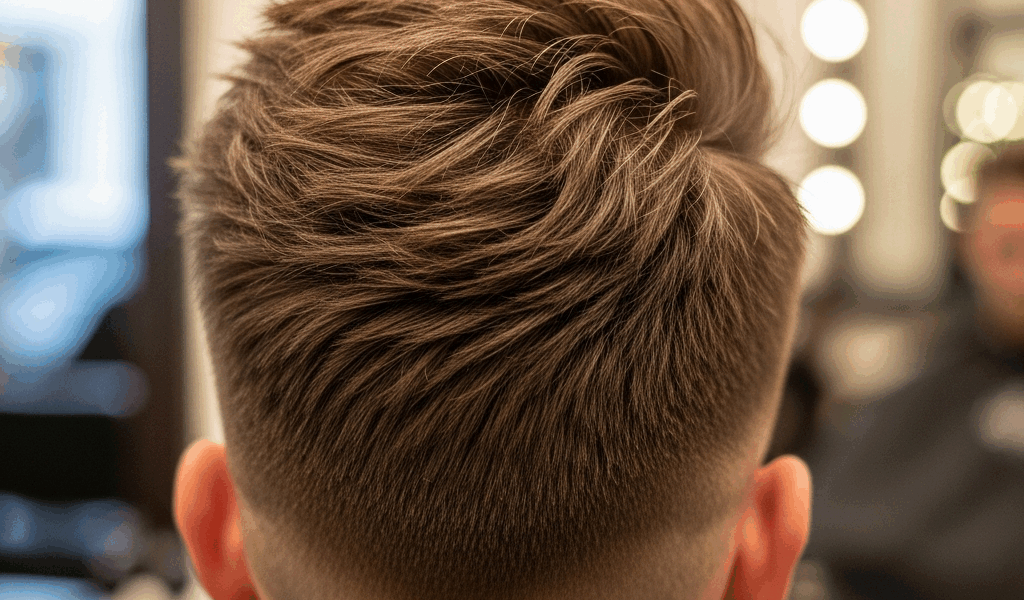
Here’s the actual issue: length without structure exposes thinning. Hair that’s long on top sits flat against your scalp, and every thinned patch becomes a spotlight moment. The eye goes straight to the gaps. Short, textured hair that stands away from the skin does the opposite — gaps disappear into texture and shadow, and suddenly you look like you have a full head of hair again. Or close enough that nobody’s staring.
The wrong cut doesn’t just fail to help. It points directly at the thing you’re trying to hide. Probably should have opened with this section, honestly — it would have saved me about eighteen months of bad mirror mornings.
Figure Out Your Thinning Pattern First
Not all thinning is the same. But what is your thinning pattern, exactly? In essence, it’s the specific way hair loss is distributed across your scalp. But it’s much more than that — it determines which cuts work and which ones make you look like you’re trying too hard.
Before you book anything or say a single word to your barber, grab a hand mirror and check the back of your head under natural light. Do it twice. Once under overhead lighting, once near a window. You’ll see more than you expect. Write down what you see. Don’t overthink it.
Three patterns show up most often:
- Diffuse thinning across the top — Your whole crown and upper scalp feels thinner, not in one specific spot. Hair density is noticeably lower than the sides. Run your hand over it and you feel more scalp than you used to. That’s diffuse.
- Thinning at the crown only — The back of your head, right at the crown, is the problem area. The front and sides still have decent density. Localized thinning changes what works entirely — don’t treat it like overall thinning or you’ll overshoot the fix.
- A receding or widening part — Your part line has gotten wider. The hair running alongside that part is thinner. Everything else looks fine. This one trips a lot of guys up because it’s not about crown density at all — it’s about that one specific line.
You know your own head better than any article does. Pick the pattern that matches and move forward.
Best Cuts for Each Thinning Pattern
Diffuse Thinning Across the Top
Go for a textured crop or French crop. Both remove length aggressively — 1.5 to 2.5 inches on top maximum, sometimes shorter. The barber should run clippers on the sides, usually a 1.5 or 2 guard for the fade, and leave the top disconnected so it sits completely separate. Not blended. Separate.
Shorter length combined with texture means individual hairs stand away from your scalp instead of lying flat against it. That standing texture creates shadow. Even at 40% of the density you had at 25, it reads thicker because you’re creating dimension instead of trying to cover ground.
Ask specifically for: “Keep the top textured and choppy, not blended into the sides, so it stands up and away from my scalp.”
Thinning at the Crown Only
A low to mid fade with a tight, short top — that’s your move. The goal is keeping the crown from becoming a focal point. A mid fade transitions the clippers around the middle of your head, which pulls visual focus down and away from the back where the thinning sits.
Keep the top under 2 inches and have the barber point-cut it for texture rather than leaving it long and combed. Combed-flat hair over a thinning crown looks hollow. Point-cut texture looks intentional.
Ask specifically for: “Low to mid fade, keep the top short and textured at the back so the crown doesn’t stand out.”
A Receding or Widening Part
A side part crop or ivy league cut works here. Both shift visual weight away from the part line itself. Instead of letting your part sit obvious — or worse, parting down the middle — you’re building volume away from where the thinning is actually happening.
The cut sits around 2 to 3 inches on top, tapered with a fade. Style it by brushing hair away from the thin part so the thicker sections do the visual work. It’s misdirection, basically. Works every time.
Ask specifically for: “Side part on the left [or right], and build the volume away from my part line so the top has movement.”
What to Tell Your Barber So You Get It Right
Most barbers understand thinning hair. Some genuinely don’t. Having the exact language ready matters — it prevents the vague back-and-forth that ends with you sitting in the chair nodding along and then going home to stare at a cut that missed the point entirely. Don’t make my mistake.
Bring a photo on your phone. Not a model with a full head of hair — someone with visibly thinner hair who’s gotten the cut right. That reference image removes the guesswork immediately. Barbers respond to visuals faster than descriptions.
Then use one of these lines depending on your pattern:
- “Keep the top disconnected and textured so it stands away from my scalp, not combed flat.”
- “I want the bulk of the length away from my crown so it’s not a focal point.”
- “Build the volume to the side, away from my part, so the thinner area isn’t obvious.”
Then add: “I’d rather go shorter than longer — I’d rather it look thick than look full.”
That last line changes the whole approach. They’ll prioritize density illusion over length. Most barbers nod immediately — they hear this from guys with thinning hair constantly. It signals that you know what you want and you won’t be upset if they take more off than usual.
One Thing That Kills the Haircut After You Leave
The barber did their job. Now you have to not undo it.
The single biggest post-cut mistake is reaching for the wrong product. Heavy pomades and slick-back gels — the shiny ones, the ones that smell like a 1950s barbershop — flatten thin hair directly against your scalp. You’re literally reversing what the cut did. I’m apparently a slow learner on this front, and Hanz de Fuko Claymation works for me while anything labeled “high shine” never does anything useful for my hair.
Use a matte clay or texture paste instead. Low shine, lighter hold. Apply it to damp hair — not soaking wet, not fully dry — and rough it up with your fingers. Don’t comb it. Don’t smooth it down. Let it sit textured and slightly chaotic. That’s the goal.
The cut handles 80% of the work. Product should just enhance the texture that’s already there — not create definition, not add shine, not weigh anything down. A dime-sized amount for short hair is genuinely enough. More than that and you’re adding weight that collapses everything the barber built.
That’s what makes this whole approach endearing to us guys dealing with thinning hair — it’s not an expensive routine or an obsessive morning ritual. Shorter, textured, and structured beats longer and flat. Every single time. Get the cut right once and the confidence shift follows almost immediately. You stop thinking about your hairline in meetings. You stop postponing the barber. You just go.



Stay in the loop
Get the latest find my haircut updates delivered to your inbox.