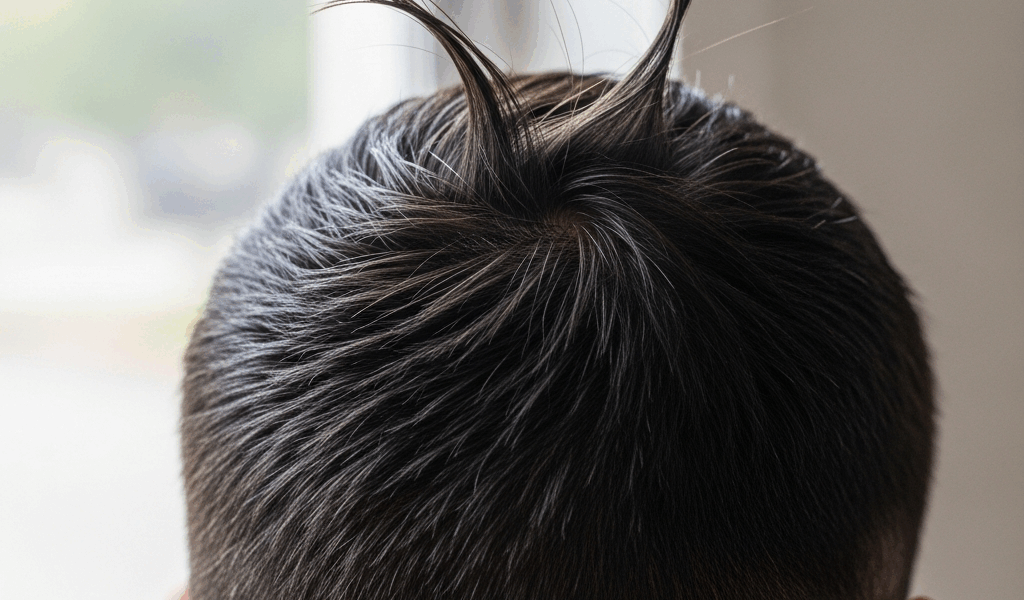
Why Your Crown Cowlick Keeps Fighting Every Cut
Crown cowlicks have gotten complicated with all the conflicting advice flying around. As someone who spent years switching barbers and burning through half-used tubs of pomade, I learned everything there is to know about this particular nightmare. Today, I will share it all with you.
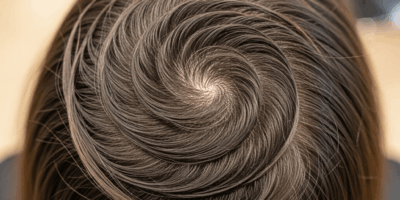
But what is a crown cowlick? In essence, it’s a whorl — a spiral point where your hair follicles grow outward in multiple directions at once. But it’s much more than that. It’s the reason a cut that looks perfect in the chair turns into a rooster tail by 8 a.m. the next morning. Your follicles literally decided during development which direction they’d point, and they’re not taking suggestions.
The cowlick itself isn’t the problem. What kills you is the cut. When a barber ignores that growth pattern — leaves everything uniform, doesn’t account for where the whorl pulls — you’re walking out of the shop holding a time bomb. Looks clean. Feels clean. Then you sleep on it once.
You can’t rewire your scalp. You absolutely can stop making it worse.
The Haircuts That Make a Crown Cowlick Worse
Not every cut works the same for every head. Most barbers won’t bring this up unless you do.
A uniform buzz — a #2 or #3 all over — is the worst possible scenario for a strong crown whorl. Every strand sits at identical length. The cowlick becomes a neon sign. Nothing nearby to soften it, nothing textured to absorb the chaos. That’s what makes a buzz cut so unforgiving for us cowlick-havers.
Probably should have opened with this section, honestly. Understanding what doesn’t work saves you more money than any styling tutorial ever will.
Crops cut too short on top are another trap. People ask for a short crop thinking it’ll be low-maintenance. Half an inch of length on top gives you exactly zero room for strategy — the cowlick runs the show completely. I made this mistake in 2019. Paid $34 for a cut I hated for six weeks.
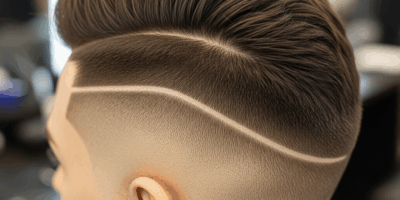
Flat-topped fades are a minefield too. Leave the crown as one uniform flat surface and the whorl doesn’t blend — it creates that split or ridge that no amount of product touches. Hard lines right over the crown are risky for the same reason. If that line lands exactly where your whorl is strongest, you’ve just framed it. Don’t make my mistake.
What to Ask Your Barber Instead
So, without further ado, let’s dive in — because this is where most online guides fall apart completely.
Everyone says “just style it differently.” But the right cut does 80% of the work. Styling finishes the last 20. Ask for the cut wrong and no amount of clay saves you.
At your next appointment, ask for length left at the crown. Not long — somewhere between 1.5 and 2 inches is the sweet spot most of the time. That gives the whorl room to blend into surrounding hair instead of launching straight up toward the ceiling.
Use the word “texturize.” Specifically, ask your barber to use clippers-over-comb or scissors to create short, choppy layers through the crown area. Texturizing might be the best option, as crown cowlicks require directional flexibility. That is because when hair can sit in multiple directions simultaneously, the whorl stops being the dominant visual — it just becomes part of the texture.
A textured crop works well for this exact reason. The crown gets deliberate bedhead texture instead of a neat flat top. The cowlick becomes part of the design rather than a flaw fighting the design. That’s what makes a textured crop so endearing to us cowlick people.
A longer top fade is another solid move — keep two to three inches on top while fading the sides shorter. That extra length lets hair sweep naturally with the whorl instead of standing perpendicular to your skull.
Here’s the exact phrase to hand your barber: “Leave the crown longer and texturized so it can sit naturally without fighting itself. No flat surface up there.” Most barbers get it immediately. If yours looks confused, that’s useful information.
How to Style It So It Stops Sticking Up
Even with the right cut, morning hair is morning hair. The routine matters more than most people think — and the details matter more than the routine.
First, you should blow-dry before styling — at least if you want results that last past noon. Wet or dampen the crown area first. This resets the direction and hands you control. Medium heat, never high. Point the nozzle downward. If your whorl pulls up and left, dry downward and slightly right — gently pushing it the opposite direction while it’s workable.
While hair is still slightly damp, apply a matte paste or clay. American Crew Fiber runs about $18 and works well for me, while gel never works for this — it dries rigid and makes cowlicks look carved in stone. Take a dime-sized amount — that’s the specific detail every other guide skips — warm it between your fingertips, then press it directly into the crown. Don’t rake. Press down in sections, hold a few seconds as it cools.
I’m apparently sensitive to heavy product buildup and Hanz de Fuko Claymation works for me while anything gel-based never cooperates. Your mileage varies. The principle doesn’t.
Let it set completely before you leave the house. Touch it while it’s drying and you’ve undone everything.
When the Cowlick Is Actually an Asset
Here’s what nobody tells you: a crown cowlick can look completely intentional with the right frame around it.
But what is an “asset” in this context? In essence, it’s a natural volume source that textured styles actually need. But it’s much more than that — it’s proof that your hair has a direction, which means it has character.
Modern shags and longer textured crops lean directly into crown movement. The whorl adds volume where styled hair often falls flat. Messy, tousled looks benefit even more — when you’re chasing deliberate bedhead, a cowlick has already done half the work before you even pick up a product.
This new understanding of cowlicks as a design feature took off several years later among modern barbers and eventually evolved into the textured styling philosophy enthusiasts know and swear by today. Work with the growth pattern. Stop apologizing for it.
While you won’t need to overhaul your entire grooming routine, you will need a handful of things: the right cut conversation, a decent matte paste, and about three minutes with a blow-dryer. The cowlick doesn’t disappear. It just stops being the first thing anyone notices — including you.

Stay in the loop
Get the latest find my haircut updates delivered to your inbox.