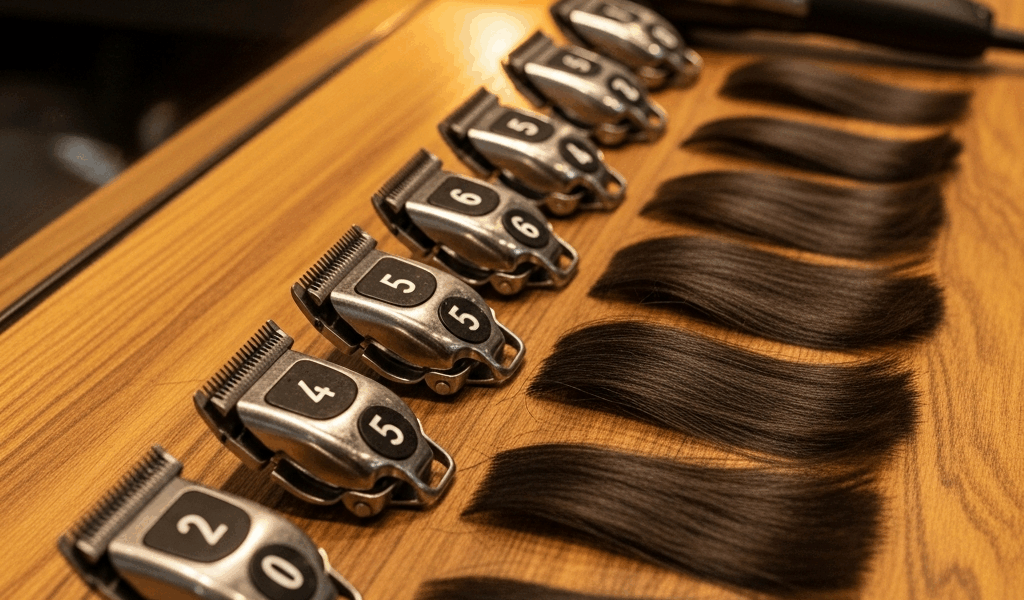
Buzz Cut Lengths From 0 to 8 Guard — What You Actually Need to Know
Buzz cut lengths have gotten complicated with all the conflicting forum noise flying around. As someone who spent years getting bad haircuts before finally figuring out the system, I learned everything there is to know about clipper guards the hard way. Today, I will share it all with you.
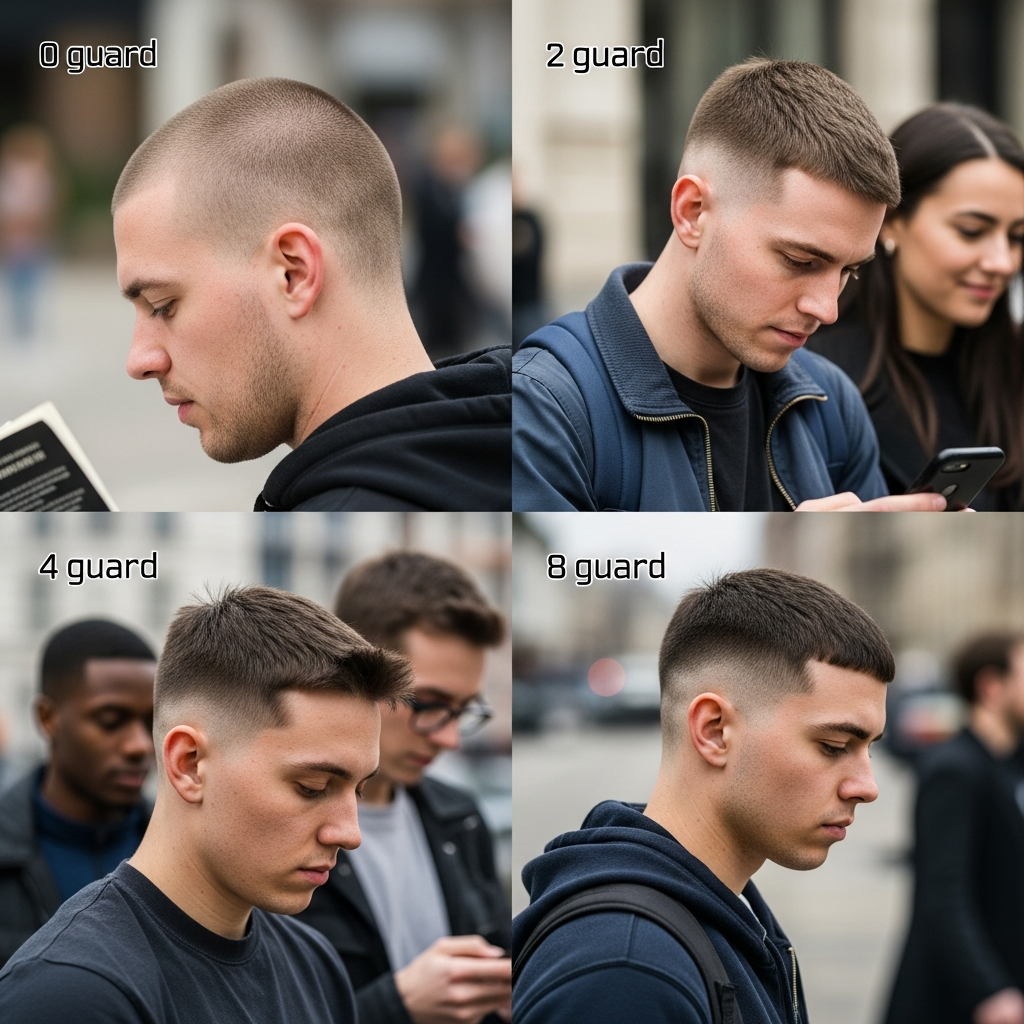
I got my first real buzz cut at 22. Told the barber “just take it short.” Watched him grab some guard I’d never heard of, click it onto a Wahl clipper, and go to work. The result looked nothing like what I’d pulled up on my phone. That was 2014. That single awkward haircut taught me something most men never bother learning: guard numbers are a universal language, and nobody explains what they actually mean in real terms.
So, without further ado, let’s dive in.
What Guard Numbers Actually Mean
But what is a clipper guard? In essence, it’s a removable plastic comb that slides over the blade and controls how much hair gets taken off. But it’s much more than that — it’s the difference between looking sharp and looking like you lost a bet.
The number stamped on the guard tells you the length of hair left behind. Each number equals one-eighth of an inch. Guard 1 leaves 1/8 inch. Guard 2 leaves 2/8 inch — that’s a quarter inch. Guard 3 leaves 3/8 inch. Simple math, genuinely useful once you know it.
In millimeters, the breakdown runs roughly like this:
- Guard 0 — No guard (bare blade, around 0mm)
- Guard 1 — 3mm
- Guard 2 — 6mm
- Guard 3 — 9-10mm
- Guard 4 — 13mm
- Guard 5 — 16mm
- Guard 6 — 19mm
- Guard 7 — 22mm
- Guard 8 — 25mm
Wahl, Andis, Oster — they all vary slightly in their tolerances. Slightly. The standard holds well enough that a guard 3 in Portland gives you basically the same result as a guard 3 in Dallas. That consistency is the whole point. That’s what makes the guard system endearing to us haircut obsessives who just want predictable results.
Guards 0 to 2 — The Shortest Cuts
Guard 0 — Skin Fade or Bald
No guard at all. Bare blade on scalp. You’re looking at stubble so short it barely registers visually — maybe a faint shadow if your hair runs dark. Most barbers reach for a guard 0 when blending sides down in a fade, not as an all-over length. Go guard 0 everywhere and you’ll look freshly shaved. No texture, no mass. On an oval or oblong face, it reads clean and intentional. On a rounder face without any blending work, it can look harsh — unflattering, honestly.
Guard 1 — Barely There Stubble
At 3mm, guard 1 is the classic five o’clock shadow length. You get texture, a sense of hair, but no real bulk. Works well if your hair runs light or fine. Darker hair at guard 1 can look almost as short as a guard 0 from across a room. Maintenance is real here — guard 1 needs a fresh cut every 7 to 10 days before it starts looking rough around the edges. Best suited to guys with strong jawlines and no thinning concerns. Sensitive scalps, beware. Shorter hair at this length can cause irritation, especially on the first few cuts.
Guard 2 — The Classic Buzz
Guard 2 at 6mm is the quintessential buzz cut. You can see it and feel it, but there’s zero styling involved — you roll out of bed and you’re done. Works on almost every face shape if the sides are blended properly. All-over guard 2 suits thicker hair and stronger facial proportions best. On a narrow or thin face, it can read too heavy unless you balance it with a fade. Low maintenance, too — you can stretch 2 to 3 weeks before it starts looking shaggy. Good choice for guys who hate fussing with their hair or sweat through workouts regularly. One downside worth knowing: if you have significant thinning or a receding hairline, guard 2 can actually emphasize it. The scalp shows through pretty clearly at 6mm.
Guards 3 to 5 — The Most Versatile Range
Guard 3 — The Sweet Spot
Honestly, most men should start here if they’re new to buzz cuts. At roughly 10mm, guard 3 gives you a clean, maintained look without the military vibe of a guard 1 or 2. Enough length to show texture and hair color, still reads as a true buzz cut rather than a grown-out crew cut. Works on all face shapes. Works on all hair types. Guard 3 is forgiving in a way the shorter guards aren’t. You can stretch cuts to 3 or 4 weeks before anything looks sloppy. Thinning hair? Guard 3 is your friend — the slightly longer length makes hair look fuller because the scalp doesn’t show as obviously at this length.
Guard 4 — Thicker Hair Territory
Guard 4 runs 13mm and starts to show real dimension. Coarse or thick hair all-over at guard 4 looks intentional and clean. Fine or thin hair at guard 4 can look a bit shapeless — like it’s trying to be something and not quite getting there. The visual difference between guard 3 and guard 4 is subtle to an untrained eye. Run your hand over it, though, and you’ll feel the difference immediately. Maintenance sits around 3 to 4 weeks. Blends well with fades on the sides.
Guard 5 — Where Buzz Meets Crop
At 16mm, guard 5 is where you’re starting to leave pure buzz territory. There’s actual bulk to the hair now. Unless you specifically want something sitting between a buzz cut and a crew cut, guard 5 all-over might not be what you’re picturing. That said, guard 5 works great on thicker hair — pairs nicely with a blended fade, longer on top and faded shorter on the sides. Blending a guard 5 on top with a guard 1 or 2 on the sides gives you a modern textured look that feels current without trying too hard.
Guards 6 to 8 — When It Becomes a Crop
By guard 6 at 19mm and beyond, you’re no longer talking about a buzz cut. Crew cut territory. Short crop territory. A guard 8 all-over leaves about an inch of hair — that’s styled hair, not a no-maintenance situation. These lengths rarely appear as all-overs anymore. They show up on top of fades and tapers where you want more texture and styling potential. Guard 6, 7, or 8 on top with a guard 2 or lower on the sides is a solid modern cut — bridges casual and polished without landing awkwardly in either direction. All-over guard 6 or higher starts requiring actual product. If low maintenance is your whole reason for buzzing it, stop at guard 5.
What to Tell Your Barber Before They Start
Probably should have opened with this section, honestly. Knowing guard numbers means nothing if you can’t communicate them once you’re sitting in the chair.
Don’t just say “give me a three.” Say this instead: “I want a number 3 all over, faded down to a one on the sides, tapered at the neck.” That tells your barber the length on top, the blending you want, and the detail work at the back. The difference between an all-over guard 3 and a guard 3 with a proper fade is the entire aesthetic of the cut — don’t skip that part of the conversation.
I’m apparently terrible at describing things verbally and showing a photo works for me while winging it never does. Don’t make my mistake. Bring a photo of a real person with similar hair to yours, shot in natural light — not some stock image from a clipper manufacturer’s website. Removes all ambiguity in about 10 seconds flat.
Walk in knowing your guard number. Know whether you want a fade or an all-over. Know whether your hair is thick, fine, or thinning. That information changes everything about which guard actually works for your head — not just in theory, but in the mirror.




Stay in the loop
Get the latest find my haircut updates delivered to your inbox.