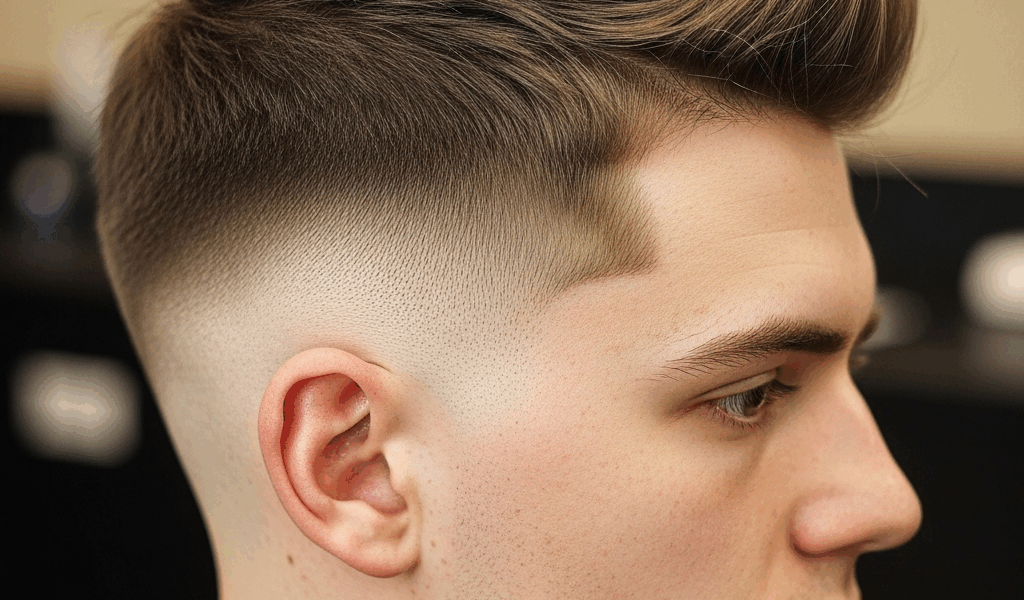
Why Most Fades Make a Receding Hairline Look Worse
Haircuts for receding hairlines have gotten complicated with all the conflicting advice flying around. As someone who spent three years watching barbers make the same mistake on my temples over and over, I learned everything there is to know about what actually works. Today, I will share it all with you.
But what is the real problem here? In essence, it’s contrast. But it’s much more than that.
A skin fade or tight low fade creates a hard boundary between bare skin and whatever length sits above it. If your hairline is pulling back at the temples — and it usually is — that sharp edge acts like a highway sign pointing directly at the recession. Your eye follows the fade line and lands exactly where the hair stopped showing up. Suddenly you look like you’re working against your hairline instead of with it.
The fix isn’t a different fade name. It’s about placement and how gradually the taper actually moves. Softness in the transition. That’s it. That’s the whole game.
Where to Tell Your Barber to Place the Fade Line
Probably should have opened with this section, honestly. Guard selection matters more than fade type — at least if you actually want the finished cut to look deliberate.
Start here: ask for a mid fade instead of a low fade. This single swap shifts where the visual contrast happens. With a mid fade, the shortest hair sits around mid-ear level toward the back, not creeping up the temple. That keeps the recession zone inside the longer, blended area where it quietly disappears.
If you’re attached to a lower fade — I get it, low fades look sharp — ask your barber specifically to blend softer around the temples. Use this language: “Keep the fade line lower on the back and sides, but work it out gentler at the temples.” Any barber cutting for more than a year understands you’re asking for wider guard transitions, not a hard jump from a 2 to bare skin inside half an inch.
Here’s the magic. A standard fade progression runs something like: 0.5 guard at the absolute base, then 1, then 1.5, then 2, then into the longer top. With a receding hairline, push that whole progression up. Request starting at a 1 guard at the lowest point — not a 0.5, not skin. Then 1.5, then 2, then into length. That one extra guard eliminates the aggressive contrast that makes recession so visible. Don’t make my mistake and assume the barber will figure this out on their own.
The Best Fade Styles for a Receding Hairline
Low taper fade with a textured, longer top. Keep the sides blended — 1 to 1.5 guards minimum — and let the top run around 2 to 3 inches. Texture matters here. Point cutting or scissor-over-comb breaks up any hard visual line near the recession. The longer hair draws the eye upward and outward. I’m apparently a 2.5-inch-on-top person and this approach works for me while anything cropped tight never does. Works especially well if you have some natural color variation going on up there.
Buzz cut with a blended fade. A 2 or 2.5 guard across the whole head with just a subtle 1-guard fade at the very bottom creates something neat and intentional. There’s no contrast problem because you’ve eliminated contrast entirely. The recession stops being visible because everything is the same length. This requires one thing: actual comfort with your hairline. You’re not hiding anything. You’re removing the environment that made it obvious in the first place. That’s what makes this style endearing to us guys who are done fighting it.
Temple fade that follows the hairline. The bold move. Ask your barber to bring the fade line higher at the temples — almost tracing the actual shape of your hairline. When it’s done right, it reads as intentional. The fade exists because of the hairline shape, not despite it. Requires a barber with real confidence — not someone still learning their transitions on a Wahl Senior and hoping for the best.
Drop fade. The line curves downward from front to back, creating a subtle arc. Because the line drops lower at the temples, it pulls contrast away from exactly where recession is visible. The back and sides stay clean. It’s less common than standard fades — finding someone who’s actually executed this cut a hundred times matters more than finding someone who’s heard of it.
What to Avoid When You Have a Receding Hairline
Skin fades near the temples. Full stop. A 0.5 guard or bare blade running up the side of the head will highlight recession instantly — no exceptions, no good-lighting workarounds. Same with hard parts carved near a receding area. A sharp line cut into short hair becomes essentially a map of where your hair decided to stop showing up.
High fades climbing past the ear. The higher that line rides, the more temple it exposes. Even a mid fade placed too aggressively creates contrast at the exact zone you need softness. The difference between a good mid fade and a bad one is sometimes a single centimeter of placement.
Significant length only at the crown with very short sides. This creates what I’d call a spotlight — all the visual weight lands on top, and anything thin or missing at the sides becomes the only reference point your eye has. The contrast amplifies recession instead of softening it.
Hard jumps between guard sizes. Barber goes from a 1 to a 3 in one pass — you get a line. Ask for: 1, 1.5, 2, 2.5, then into the longer top. That’s maybe two extra minutes in the chair and it eliminates the harshness completely.
How to Talk to Your Barber About It
So, without further ado, here’s exactly what to say.
You don’t need an explanation or an apology. Just say: “I’d like a fade that doesn’t draw attention to my temples — mid-height fade line, gradual transition.” A barber who’s been cutting for more than a year has heard this before. They know what you mean.
Want more specificity? Try: “Mid fade, guards progressing slowly — 1, 1.5, 2, then into length on top. Keep the taper soft around the sides.” Clear enough to prevent miscommunication. Not so clinical that you sound like you printed it off a website — even if you did.
Bring a photo if you have one. Not someone with a perfect hairline. An actual cut you’ve seen in real life that didn’t pull your eye toward the recession. That visual reference eliminates the guesswork that leads to the same mistake getting repeated every six weeks.
One thing for your next appointment: ask for a mid fade with gradual guard progression instead of a low fade with sharp transitions. That single request — honestly — will change what you see in the mirror.


Stay in the loop
Get the latest find my haircut updates delivered to your inbox.