Why Skin Fades Go Patchy as They Grow
Skin fades have gotten complicated with all the conflicting advice flying around. You walk out of the barber chair on day one looking clean. Three weeks later, you’re standing in the bathroom mirror wondering if your barber botched it — or if your hair is just doing what your hair does.
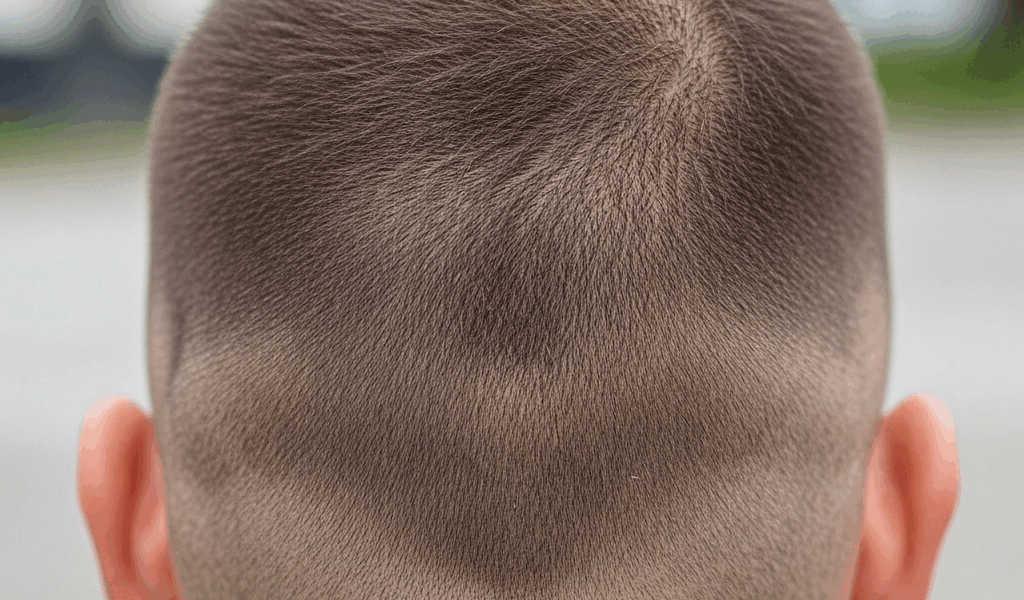
But what’s actually happening here? In essence, a skin fade runs a zero guard right down to bare scalp. But it’s much more than that simple fact. The moment any new hair pushes through — and it starts immediately — you see every single strand. All of it, no buffer, no guard length to hide behind. Hair also doesn’t grow at the same rate across your entire head, so some patches fill in darker and faster than others. That’s not a defect. That’s just biology.
This article includes affiliate links. We may earn a commission at no extra cost to you.
Coarser and curlier textures make this worse, noticeably so. Those strands sit up higher off the scalp than straight hair does — sometimes 2 to 3mm higher just from the curl pattern alone — which means the regrowth shadow appears sooner and reads as more dramatic. Someone with fine, straight hair might stretch a skin fade to day 21 without much complaint. Someone with thick, coily hair? By day 12 it already looks choppy. That’s what makes texture such a defining variable for fade maintenance schedules.
Density plays into it too. Most guys carry denser hair on top and thinner coverage on the sides. The sides show regrowth faster because there’s bare scalp immediately underneath. It’s not your imagination. The blend quality the barber left behind also matters here — we’ll get into that next.
Is It the Haircut or Your Hair Growing Back?
Before you blame the barber or your genetics, figure out what you’re actually dealing with. These two problems look different if you know what to check for.
A bad blend shows up immediately. Within 24 to 48 hours of sitting in the chair, you’ll notice hard horizontal lines or striping where the guard lengths transition. One side might look smooth while the other looks stepped. The patchiness is asymmetrical — it doesn’t transition softly from skin to longer hair, it jumps. This is a technique issue, full stop, and it won’t improve as your hair grows. It stays bad until the whole fade grows out long enough to recut.
Normal regrowth patchiness looks completely different. It appears gradually across the first seven to ten days. The stubble shadow darkens across the fade zone, but because growth rates vary by spot, certain areas fill in ahead of others. Crucially, the patchiness is symmetrical — both sides show the same pattern. Run your hand over it and the texture feels consistent. You can still see the barber’s blend underneath the new growth. That’s the tell.
Here’s the test. Check your fade line under bright natural light — outside works better than a bathroom. Clear horizontal striping that doesn’t match on both sides means a rough blend. Even stubble shadow that’s just fuller in some areas than others means normal growth. Pull up the photos from right after your cut if you have them. That comparison tells you everything you need to know, honestly.
What You Can Do Between Barber Visits
Diagnosed with normal regrowth patchiness? Good. You actually have some options that don’t involve booking another appointment.
While you won’t need professional-grade clippers, you will need a handful of decent tools. A Wahl Detailer or Andis T-Outliner — both run around $35 to $60 depending on where you buy them — set to 0.5mm or 1mm will knock back the shadow line without creating new damage. Run it against the grain, lightly, over the areas reading darkest. You’re not trying to touch the longer hair on top. Just reduce the visible stubble. Do this every four or five days and the patchiness stays manageable until your next real appointment.
Probably should have opened with this section, honestly — if you own full clippers at home, you can try tapering the fade slightly using a zero guard, no comb attachment. This is riskier. I’m apparently heavy-handed and the Wahl Senior works for me while the cheaper plastic-guard clippers never gave me clean lines. Don’t make my mistake of grabbing whatever’s nearby and going to town. If you’ve clipped your own hair before and you trust your steadiness, running a zero guard in the direction of hair growth over the patchy spots can smooth things out. Keep it to the very edge. Don’t attempt to reblend the full fade yourself.
Third option: stop fighting it. Let the fade grow for three to four weeks until enough length has come in that the patchiness stops reading as patchiness. You essentially transition from a skin fade into a low fade. Requires patience. Works every time.
Skip the hair dye. Skip the beard dye on sparse spots. Don’t buzz random sections trying to self-correct. And stay away from straight razors on the fade line — clipper bumps and ingrown hairs are a worse problem than uneven regrowth.
How to Tell Your Barber to Fix It Next Time
Communication kills half these problems before they start. Most guys walk in and say “skin fade” and nothing else, so the barber fills in the blanks however they see fit.
Stop saying just “clean skin fade.” Try this instead: “I want the blend feathered longer into the hair on top so the transition stays soft as it grows out.” Or: “No hard lines — fade it gradually from skin all the way up, as gradual as you can make it.” Get specific about where you want the shadow to disappear. “I want the blend to reach at least two inches up the back” is a clear instruction. It signals to the barber that you understand regrowth and you’ve thought about it.
If your hair grows fast or comes in dense, say that upfront. “My hair fills in thick within two weeks, so please take extra time on the blend.” That’s it. Barbers respect directness — that’s what makes straightforward clients endearing to experienced barbers. And if your fade looked rough by week two last time, tell them exactly that: “The sides were uneven by day 12. Can you adjust your technique?” They’ll know what to look for.
Ask about guard choices too. Some barbers blend using a 0.5 guard rather than fading straight to skin. This might be the best option, as a feathered blend requires more grow-out tolerance. That is because a slight guard buffer hides early regrowth far better than a true zero. The fade won’t be as crisp on day one, but you’ll stretch your maintenance window by four or five days. Worth talking about if you hate sitting in the chair every ten days.
How Often You Actually Need to Maintain a Skin Fade
Here’s the uncomfortable truth nobody says out loud: a skin fade needs a touch-up every 10 to 14 days. Not three weeks. Not when you get around to it. Ten to fourteen days.
That’s the reality of zero guard fades. The regrowth is visible. You can live with it — plenty of guys do. But if patchiness frustrates you, you clearly care how it looks. And caring how it looks means committing to the maintenance window. First, you should book your next appointment before you leave the chair — at least if you want to actually stick to the schedule instead of scrambling to find availability three weeks later.
Some guys go every seven days during summer. Some stretch to three weeks and accept the rough middle phase. Neither approach is wrong. But coming in at week three frustrated that it looks patchy, then waiting another three weeks before the next cut — that cycle creates maximum frustration for minimum reward. That was my schedule for about six months before I wised up.
If every two weeks sounds like too much, a low fade or mid fade might be the better call. Both grow out more gracefully. Patchiness is less visible. You can push to three weeks without it looking neglected. No shame in that trade.
The skin fade is worth maintaining if you want the look and have the bandwidth for it. Just go in knowing what that actually means before you commit to it.


Stay in the loop
Get the latest find my haircut updates delivered to your inbox.