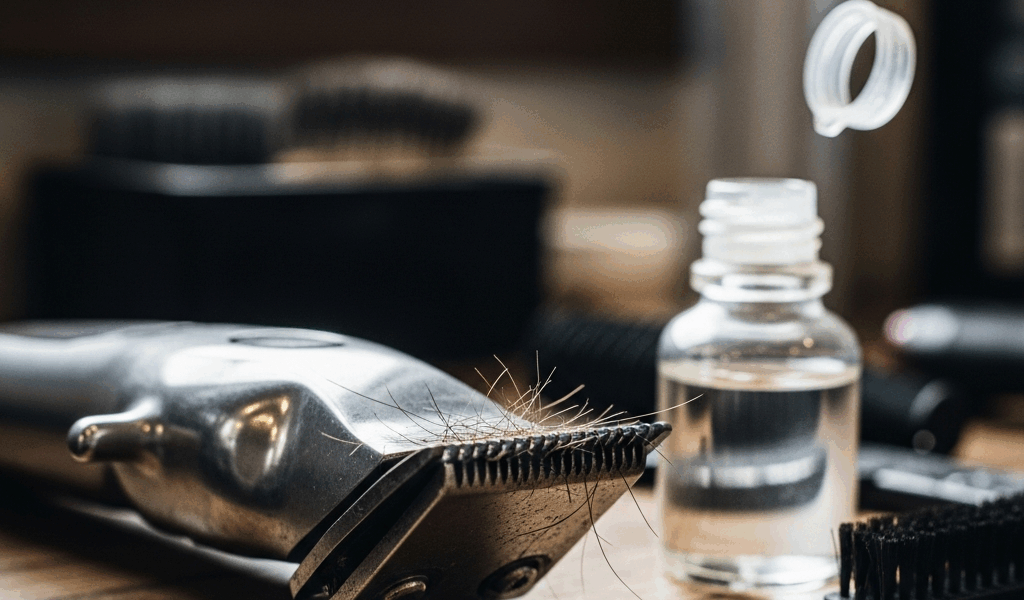
Hair Clippers Not Cutting? 6 Fixes Before You Buy New Ones
If your hair clippers not cutting properly is sending you down a frustrating rabbit hole at 7pm with wet hair and nowhere to be, you’re in the right place. I started cutting my own hair in 2020 — classic pandemic move — and I’ve since worked through every single failure mode these machines can throw at you. Pulling. Snagging. Running over the same patch six times and getting nothing. That maddening hum with zero blade action. Almost every time, the fix took less than ten minutes and cost nothing. Here’s what actually works.
Fix 1 — Clean the Blades (Takes 2 Minutes)
Hair buildup is the number one reason clippers stop cutting. Full stop. The tiny metal teeth on your blade get packed with cut hair, skin cells, and product residue until there’s simply no room for new hair to pass through. The blade is technically moving, but it’s doing nothing useful. It feels like trying to cut paper with scissors that are taped shut.
Here’s the process:
- Turn the clippers off and unplug them (or remove from the charger if cordless).
- Press the blade release lever or unscrew the blade — most Wahl and Andis models pop off with a single lever push.
- Tap the blade face-down against your palm or a paper towel. You’ll be surprised how much falls out.
- Take a stiff cleaning brush — Wahl includes one, it looks like a tiny toothbrush — and scrub between the teeth in short, firm strokes going with the direction of the teeth, not against them.
- If you want to go further, fill a small bowl with clipper cleaning solution (Wahl Blade Ice spray works, costs about $8 at Sally Beauty) and dip just the blade end while running the clippers for five seconds. This pulls debris out and lubricates at the same time.
- Dry the blade completely before reattaching.
I once went almost three months without cleaning my Andis Master blades. The pull was so bad I thought the motor was dying. Two minutes with a brush and they cut like new. Lesson learned the slow way.
Fix 2 — Oil the Blades
Probably should have opened with this section, honestly, because oiling and cleaning go hand in hand and skipping either one gets you to the same place — clippers that tug instead of cut.
Metal on metal friction without lubrication generates heat, dulls the blade edges faster, and makes the motor work harder than it needs to. The cutting action gets sluggish. You’ll also notice the clippers get unusually hot after just a few minutes of use — that’s a classic sign of insufficient oil.
What oil to use
Use clipper-specific blade oil. It’s lightweight mineral oil formulated to stay where you put it without gumming up. Wahl sells a 4-ounce bottle for around $3. Don’t use WD-40. Don’t use cooking oil. Don’t use 3-in-1. I’ve seen all of these suggested in grooming forums and they all cause more problems than they solve — WD-40 in particular dries out and leaves residue that attracts hair debris.
Where and when to apply
Apply two or three drops along the top of the blade where the two metal pieces meet. Turn the clippers on for five seconds so the oil distributes across the full cutting surface. Wipe off any excess from the face of the blade with a cloth so it doesn’t transfer to your scalp or your kid’s hair.
Do this before every single use. During a longer session — anything over 15 minutes — add oil again. It evaporates and flings off during operation faster than most people expect.
Fix 3 — Check Blade Alignment
This one gets missed constantly. Even if your blades are clean and oiled, if they’re out of alignment, they will not cut correctly. The top blade (the one with the shorter, finer teeth that moves back and forth) should sit slightly behind the bottom blade. Slightly. We’re talking about a millimeter. If it rides too far forward, those teeth go past the cutting edge and catch hair instead of cutting it.
Frustrated by persistent pulling after a thorough cleaning, I watched three YouTube tutorials before I noticed my top blade had shifted almost 2mm forward after I’d dropped the clippers on a tile floor. The answer was a single Phillips head screwdriver.
Here’s how to realign:
- Look at the blade head straight on. You should see the bottom blade’s teeth extending slightly past the top blade — roughly 1mm of bottom blade visible at the tip.
- If the top blade is too far forward, loosen the two screws on the blade assembly. Don’t remove them — just break the tension.
- Slide the top blade back until it’s just behind the bottom blade’s tips.
- Retighten the screws while holding the blade in position. Snug, not gorilla-tight.
- Test on a piece of tissue paper — properly aligned blades will cut cleanly through it.
Check alignment any time you reassemble the blades after cleaning. It shifts more often than you’d think.
Fix 4 — Replace the Blade (Not the Whole Clipper)
Blades are consumable parts. They dull. The metal edge wears down over months of use, and no amount of cleaning or oiling restores a genuinely dull blade. What some people don’t know is that you can swap just the blade — not the whole unit — for $15 to $25 and get a machine that performs like new again.
The key is matching the replacement blade to your specific model. This matters more than people realize. A Wahl #2191 blade fits the Magic Clip. A Wahl #2068-300 fits the Senior. Andis blades don’t cross-fit Wahl bodies in most cases. Check the sticker on the bottom of your clipper for the model number, then search “[model number] replacement blade” on Amazon or the manufacturer’s site. Wahl and Andis both sell directly and ship fast.
Before ordering, try a blade sharpening service if there’s one near you — some barbershops and beauty supply stores offer it for around $5 to $8 per blade. It’s worth one attempt if the blade isn’t physically nicked or corroded.
Fix 5 — Check the Motor and Battery
Cordless clippers have an Achilles heel — the battery. A weak or partially discharged lithium battery delivers less power to the motor, and that reduced torque shows up immediately as poor cutting performance. The blades are technically moving at the right speed on the spec sheet, but real-world performance drops noticeably when the battery is below 30% charge.
Simple test: fully charge your clippers (most modern units take 60 to 90 minutes for a full charge), then immediately test them on hair. If they cut well when fresh off the charger but degrade within a few minutes, the battery is losing its capacity. Lithium batteries in clippers typically last 2 to 4 years with regular use before they start holding significantly less charge.
For corded clippers, the motor issue is different. If yours suddenly sounds like it’s straining — a lower, grinding pitch instead of the usual clean hum — check that the blade tension isn’t set too tight. Over-tightened blades create drag that makes the motor work harder. Most clippers have a blade tension screw on the back or side of the head; back it off a quarter turn and see if the sound normalizes.
Also: a loose or damaged power cord on corded models causes intermittent power drops that feel exactly like motor problems. Flex the cord near the body of the unit while it’s running. Any flickering or change in sound means the cord is the culprit, not the motor itself.
When to Actually Buy New Clippers
There are situations where no fix gets you there. Here’s what that actually looks like, so you’re not throwing money at a machine that’s genuinely done.
- The motor hums but the blade doesn’t move — or barely moves. The drive mechanism that transfers motor rotation to blade movement has failed. This is not a home repair. New clippers.
- The housing is cracked at the blade attachment point. The blade won’t seat properly, alignment is impossible to maintain, and there’s a safety issue. Done.
- You’ve replaced the blade and it still pulls — after proper alignment, cleaning, and oiling. At this point the motor isn’t generating enough torque to drive even a fresh blade correctly. The motor is worn.
- The battery won’t hold more than 5 minutes of charge even after a full cycle, and the unit is more than 3 years old. Some brands sell replacement batteries, but labor and part cost often approach the price of a new mid-range clipper.
- Corrosion on the blade mount. If the metal where the blade connects to the body is visibly rusted or corroded, blade alignment will never hold and the connection is compromised.
For reference, a solid entry-level replacement — Wahl Color Pro, around $30 — handles basic home haircuts reliably. The Wahl Magic Clip runs about $65 and is what most home barbers eventually land on. You don’t need to spend more than that unless you’re cutting hair daily or working toward fade techniques that demand tighter tolerances.
Most of the time, though? Clean it, oil it, check the alignment. That’s it. The fix is almost always one of those three things, and you’ll know in fifteen minutes whether you need to go further down the list.




Stay in the loop
Get the latest find my haircut updates delivered to your inbox.