
A great haircut and a great beard are each impressive on their own. Together, when they’re actually matched to each other, the combination can define your entire look in a way that neither element does alone. The problem is that most men pick a beard and a haircut independently rather than thinking about how they interact. Here’s how to get the pairing right.
Why Matching Matters
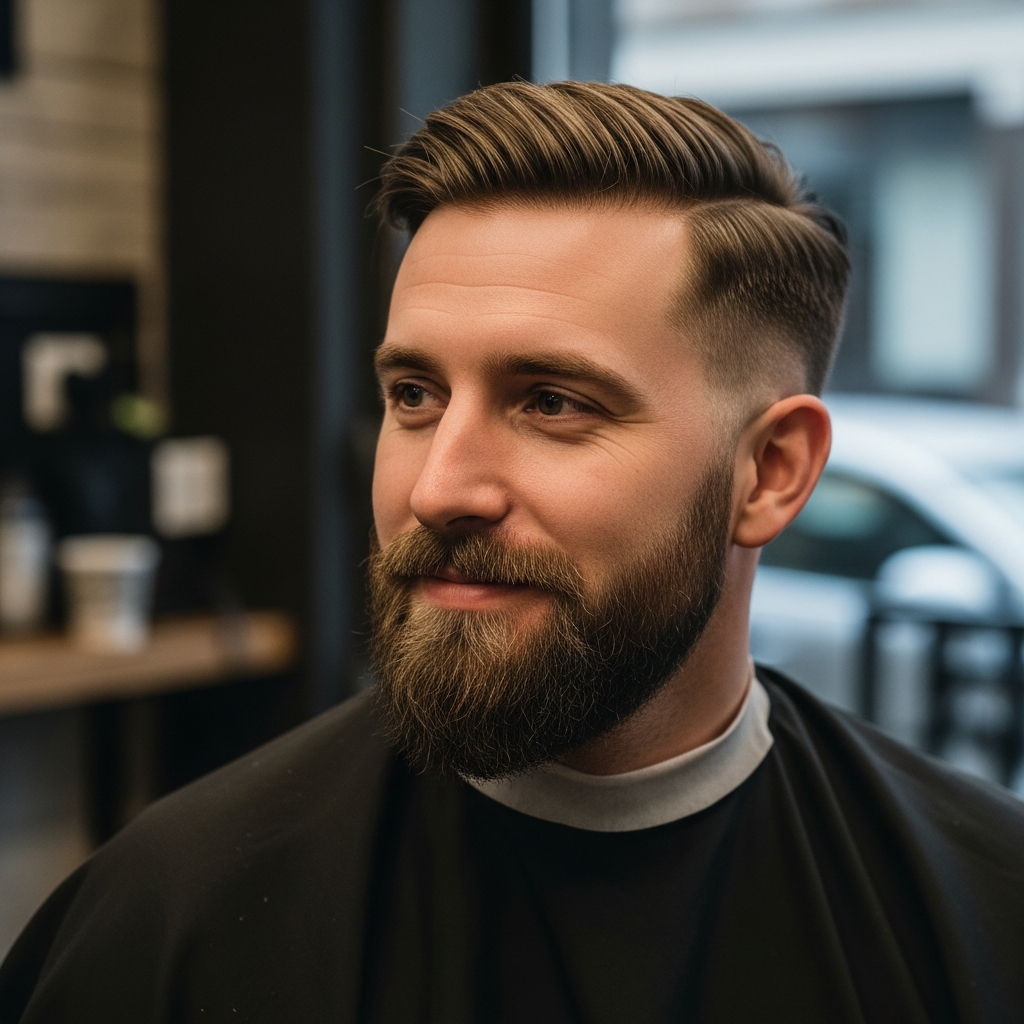
Your beard and haircut together form the frame around your face. The wrong combination creates visual conflict — a very clean precise haircut next to a wild untrimmed beard, or a soft casual cut next to an overly manicured, architectural beard. The right combination creates a unified look that feels intentional and reads as put-together even when the style is deliberately relaxed.
The general principle: match the grooming level and the visual weight. A tight, high-maintenance cut should pair with a tight, high-maintenance beard. A relaxed, textured cut pairs with a more natural, fuller beard. When the formality levels match, the look holds together.
Specific Haircut and Beard Pairings That Work
Skin Fade + Short Stubble or Tight Beard
The skin fade — sides down to bare skin — is one of the sharpest, most precise haircuts available. It needs a beard with the same level of precision. Heavy five o’clock stubble (3-5mm, evenly maintained) or a short, tightly shaped beard with clean edges at the cheek line and neckline. The fade and the beard line should complement each other — the fade typically ends at or just above where the beard begins, creating a seamless visual transition. This is one of the most photographed combinations in barbershop content right now for good reason.
Textured Crop + Medium Beard
The textured crop — short to medium on top, fade or taper on the sides — pairs naturally with a medium-length beard of 10-15mm. The textured, somewhat casual nature of the crop allows the beard to be slightly fuller and less geometric. The beard still needs a defined neckline and cheek line, but the overall silhouette can be rounder and more organic. This pairing works across almost every face shape and is one of the most versatile beard-and-cut combinations.
Long Hair / Bro Flow + Full Beard
Medium to long hair naturally supports a fuller, longer beard. The visual weight is distributed across the whole frame — long hair on top, full beard on the bottom — which works because both elements are in the same category of “substantial.” The risk with this combination is it becoming too heavy and obscuring the face completely. The fix: keep the beard shaped with defined edges even when it’s full, and ensure there’s contrast between the volume of the hair and the beard rather than one blending into the other.
Buzz Cut + Full Beard
This is the bald-fade-with-beard combination that has dominated men’s grooming for years, and it works for a specific reason: the contrast between the bare or nearly-bare scalp and a full beard creates an extremely strong, masculine silhouette. It’s also one of the most practical combinations for men with thinning hair — the buzz removes the thinning as a visual concern and the beard compensates with presence. The beard does need to be well-maintained; a poorly kept beard with a buzz reads very differently than an intentional one.
Side Part / Classic Cut + Short Trimmed Beard
A more formal, polished haircut — the side part, the slick back, the Ivy League — calls for a more formal beard. This means clean, tight, and well-defined: a 5-7mm short beard or heavy stubble with crisp cheek lines and a clean neckline. The overall impression is polished and professional. Going longer or more natural with the beard while wearing a precise formal haircut creates visual tension that undermines both elements.
Undercut / Disconnected Fade + Beard
The undercut — longer on top, disconnected from very short or shaved sides — is a bolder, more fashion-forward cut that works especially well with a medium-full beard. The disconnection in the undercut creates strong geometry that the beard enhances rather than competes with. The beard should be shaped and maintained but can be fuller than you’d wear with a conservative cut.
Face Shape Considerations for Beard and Cut Together
Round Face
Round faces benefit from length and height. A higher cut on top (faded sides, volume or height up top) combined with a beard that’s longer at the chin than the sides creates a visual elongation. Avoid round, full beards that add width to an already round face. The goal is vertical emphasis.
Square Face
Square faces have strong jawlines that a beard can either emphasize or soften. If you want to emphasize the jaw, keep the beard very short and tight along the jaw edge. If you want a more balanced look, a fuller beard with rounded edges softens the angles. Haircuts with some texture and softness on top work better than extremely precise cuts that add more visual angularity.
Oval Face
Oval faces are the most forgiving and work with almost any beard-and-cut combination. The main thing to avoid is overcomplicating it — an oval face looks good in a huge range of styles, so pick what you like and execute it well rather than overthinking the geometry.
Long / Oblong Face
Long faces benefit from width rather than height. Avoid very high-volume cuts on top or very long beards that extend the face further. A wider, fuller beard and a cut with some side volume creates horizontal mass that balances the length. The flattest (in terms of vertical emphasis) beard-and-cut combinations tend to work best here.
Getting the Beard Line Right
The most common beard-and-haircut problem isn’t the pairing — it’s the neckline. A beard that extends too far down the neck obscures the jaw and creates a heavy, undefined look. The general rule: the neckline should be about two finger-widths above the Adam’s apple. No lower. When in doubt, have your barber clean up the neckline at every haircut appointment. Most barbers will do this quickly at no extra charge and it’s one of the highest-impact maintenance moves in men’s grooming.
The right beard-and-haircut pairing doesn’t require getting the same trim weekly or maintaining military precision. It requires choosing two elements that are working toward the same aesthetic, maintaining them at the same level of care, and making sure the transitions and lines between them are clean. When those three things are in place, the combination almost always works.



Stay in the loop
Get the latest find my haircut updates delivered to your inbox.