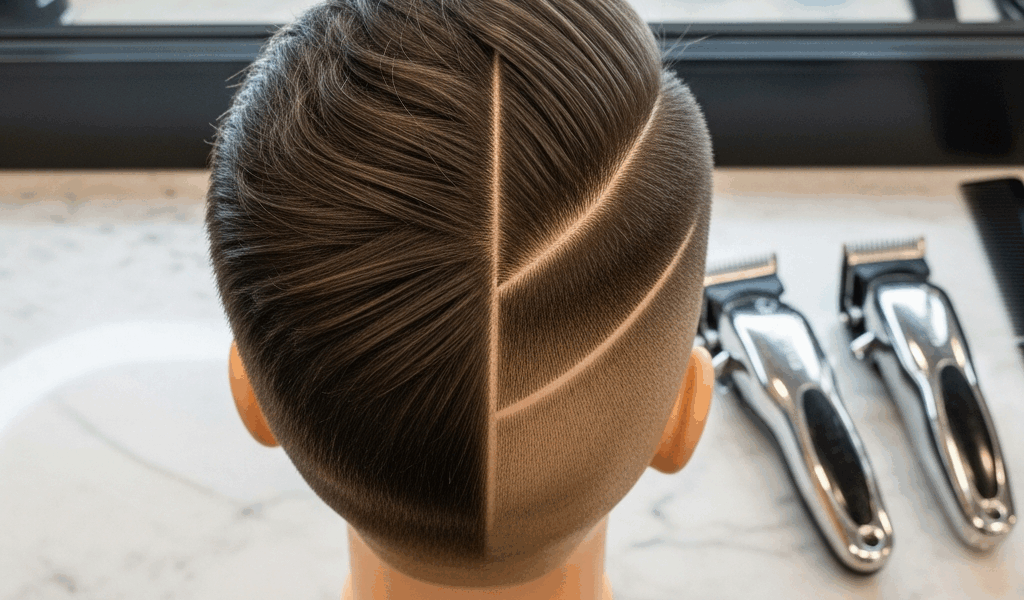
Taper vs Fade — The Difference Your Barber Wishes You Knew
Barbershop terminology has gotten complicated with all the conflicting advice flying around. As someone who has spent fifteen years rotating through barbershop chairs in three different cities, I learned everything there is to know about this particular subject. Today, I will share it all with you.
This article includes affiliate links. We may earn a commission at no extra cost to you.
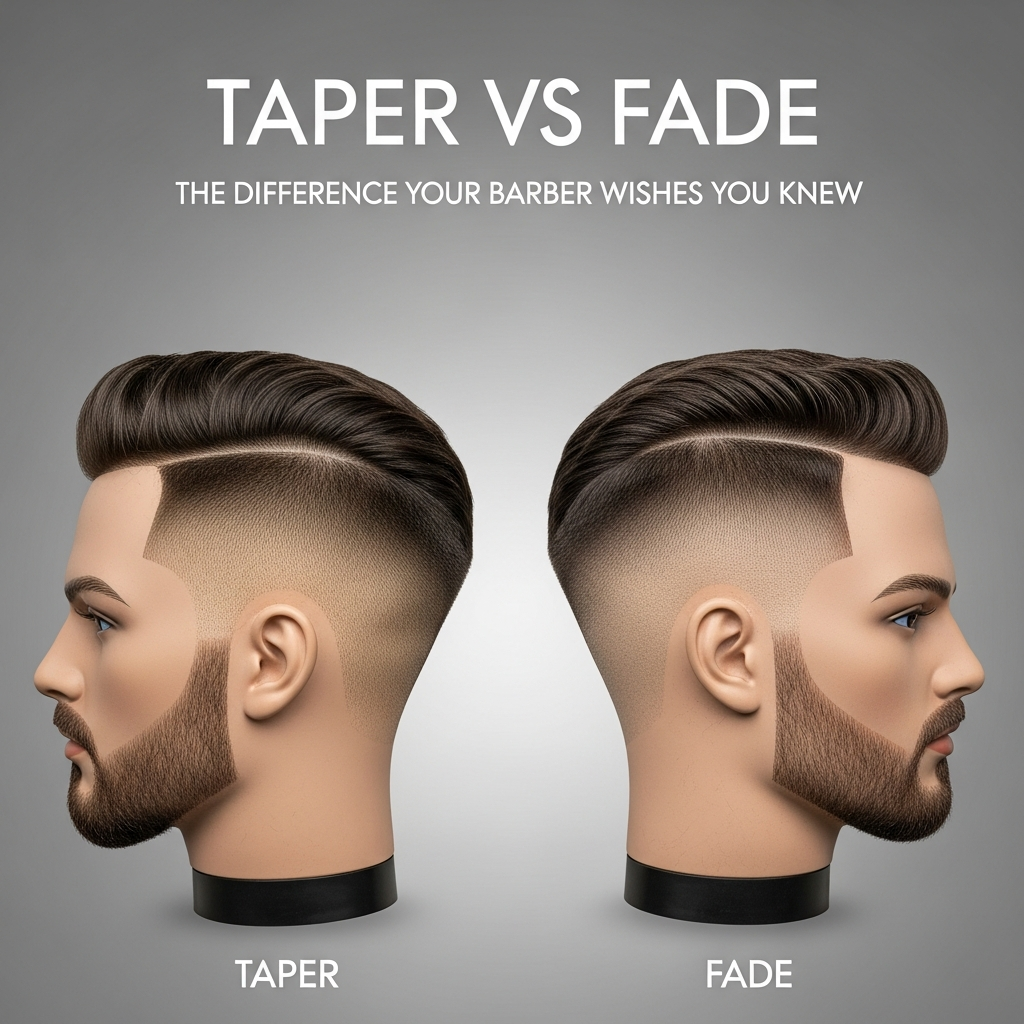
Most people use “taper” and “fade” interchangeably. Most people are wrong. Your barber has probably stopped correcting clients at this point — the explanation genuinely takes longer than the cut itself, and they’ve got four people waiting.
So, without further ado, let’s dive in.
The One-Sentence Difference — A Gradual Change That Either Stops or Doesn’t
But what is the actual distinction here? In essence, it’s this: a taper gradually reduces hair length but stops before reaching the skin, while a fade keeps going until it hits skin — or nearly does. But it’s much more than that single line suggests.
That’s the entire distinction. Everything else — the boldness, the maintenance schedule, the occasions where each works — flows from this one detail.
When you ask for a taper, your barber moves through progressively smaller clipper guards from the top down toward the sides and back. The shortest you’ll go is probably a #2 or #3 guard. That’s roughly a quarter-inch to three-eighths of an inch of hair still remaining. Visible hair. Always coverage.
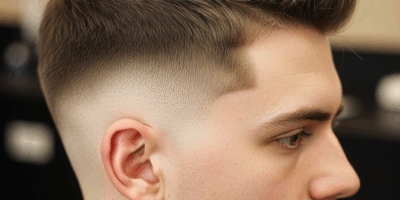
With a fade, that progression continues right down to the skin. Sometimes a #0.5 guard, sometimes nothing at all. You’ll see skin. Bold, clean contrast against whatever’s happening on top.
I learned this the hard way — walked into a shop on Broad Street in 2019, asked for a fade because my coworker Marcus was rocking one and I liked it. What I got was a #1 on the sides tapering into the top. Not a fade. Probably should have opened with this section, honestly. Cost me a month of awkward grow-out and one mildly uncomfortable return visit.
When to Ask for a Taper — The Professional, Graceful Option
You want a taper when professionalism matters and you’d rather not live at the barbershop.
Tapers suit corporate environments, conservative workplaces, anyone logging long hours in courtrooms or classrooms. The longer minimum length means hair grows out gracefully. By week three, you don’t look unkempt — you just look like you’re due for a trim. That’s a meaningful difference.
A taper pairs beautifully with a longer top. Slicked back, textured and voluminous, or just left somewhat natural — a tapered side creates definition without announcing to your entire Monday morning meeting that you just got a haircut. Subtle. Clean. Intentional without being experimental.
Classic tapers work across face shapes and hair types. Curly hair especially benefits here — there’s room to work with texture without the harsh lines a fade demands. Fine hair, too. A taper won’t expose your scalp the way a fade might, which matters more than people admit.
Price-wise, a basic taper runs $20–$30 at most shops. Add a detailed line-up around the neck and ears and you’re probably looking at $35. That’s your standard walk-in range at a decent independent barbershop.
Men in finance, law, education, and government wear tapers. Not because it’s trendy. Because it works for three weeks without requiring reinforcements.
When to Ask for a Fade — The Bold, High-Maintenance Statement
You want a fade when you’re genuinely committed to the aesthetic — and willing to back that commitment with calendar reminders.
Fades announce themselves. The stark contrast between skin and the hair sitting on top creates real visual drama. Sharp. Modern. The kind of cut that reads as deliberate from across a room.
But fades require maintenance. A fade looks crisp for ten to twelve days. After that, the hair starts filling in, the line softens, and the whole effect starts deteriorating noticeably. Most fade-wearers are back in the chair every two to three weeks. Sometimes sooner. That’s not an exaggeration — I’m apparently a slow grower and even I was back within sixteen days when I tried maintaining one regularly.
A fade pairs perfectly with a textured or styled top. Controlled chaos on top, near-skin contrast on the sides. That juxtaposition is exactly why fades exploded through hip-hop culture and into contemporary barbering. That’s what makes the fade endearing to us style-conscious guys who want something with actual presence.
Fades cost more. Expect $30–$45 at a decent shop. In New York or Los Angeles, going to someone with a reputation? Budget $50–$60 and tip appropriately.
Variations exist: the low fade sits around the temples, the mid fade hits a neutral transition point, and the high fade climbs toward the crown. Each creates different proportions. All share the one non-negotiable — hair reaches skin.
The Taper Fade — Honestly the Most Popular Hybrid
Here’s what most men actually want, even when they don’t know to ask for it: a taper fade.
Frustrated by having to choose between longevity and a sharp look, most guys eventually land here — combining a taper on top with a fade on the bottom. The sides and back fade toward skin. The top tapers gradually from longer to shorter, maintaining visible hair throughout. This new approach took off several years ago and eventually evolved into the everyday standard enthusiasts know and request today.
It’s the most common cut walking around any American city right now. Not because it’s flashy. Because it works.
While you won’t need to memorize clipper guard numbers, you will need a handful of specific details ready when you sit down. First, you should tell your barber the fade line height — at least if you want them to actually execute what’s in your head. Say “low,” “mid,” or “high.” Then tell them how long you want the top left. An inch. An inch and a half. Two inches. Numbers matter in barbering. Pointing vaguely at your head doesn’t help anyone.
Specific language might be the best option, as barbering requires precision. That is because even a half-guard difference on the sides changes the entire proportional relationship between your top and your fade line.
A taper fade typically runs $35–$50 depending on location and the barber’s skill level. More technique than a simple taper, less precision than a complex design fade. It sits right in the middle.
Maintenance window is fourteen to eighteen days if you want it looking sharp. Push to three weeks and it’s still presentable — just slightly less dramatic. Don’t make my mistake of waiting twenty-two days and wondering why it looked wrong. It just needed a refresh.
Confused about which one you actually want? Go with the taper fade. It’s forgiving. It’s versatile. It looks current without screaming that you’re chasing something. And when growth happens — because it will — it doesn’t look abandoned.
That’s the knowledge your barber wishes you had walking in the door.

Stay in the loop
Get the latest find my haircut updates delivered to your inbox.